Process
A clear path to a resolved garden.
A structured approach, with space for the design to evolve.
Every project begins with a conversation — not simply about what the garden should look like, but how it will be used, how it should feel, and how it relates to the house and its setting.
The process is deliberately structured, moving from initial ideas through to detailed design and construction. Each stage builds on the last, allowing decisions to be tested, refined and resolved with clarity.
This approach ensures the finished garden is not only visually coherent, but properly considered — able to be built with confidence and to endure over time.
Stages
Initial consultation
An on-site meeting to understand the property, your requirements and the potential of the space.
Reading the site
Surveys and analysis establish accurate information, forming the basis for all design work that follows.
Concept design
Early layouts and ideas explore how the garden could be organised, testing spatial relationships and character.
Masterplan
The design becomes clear — a resolved overall composition that sets the direction for the project.
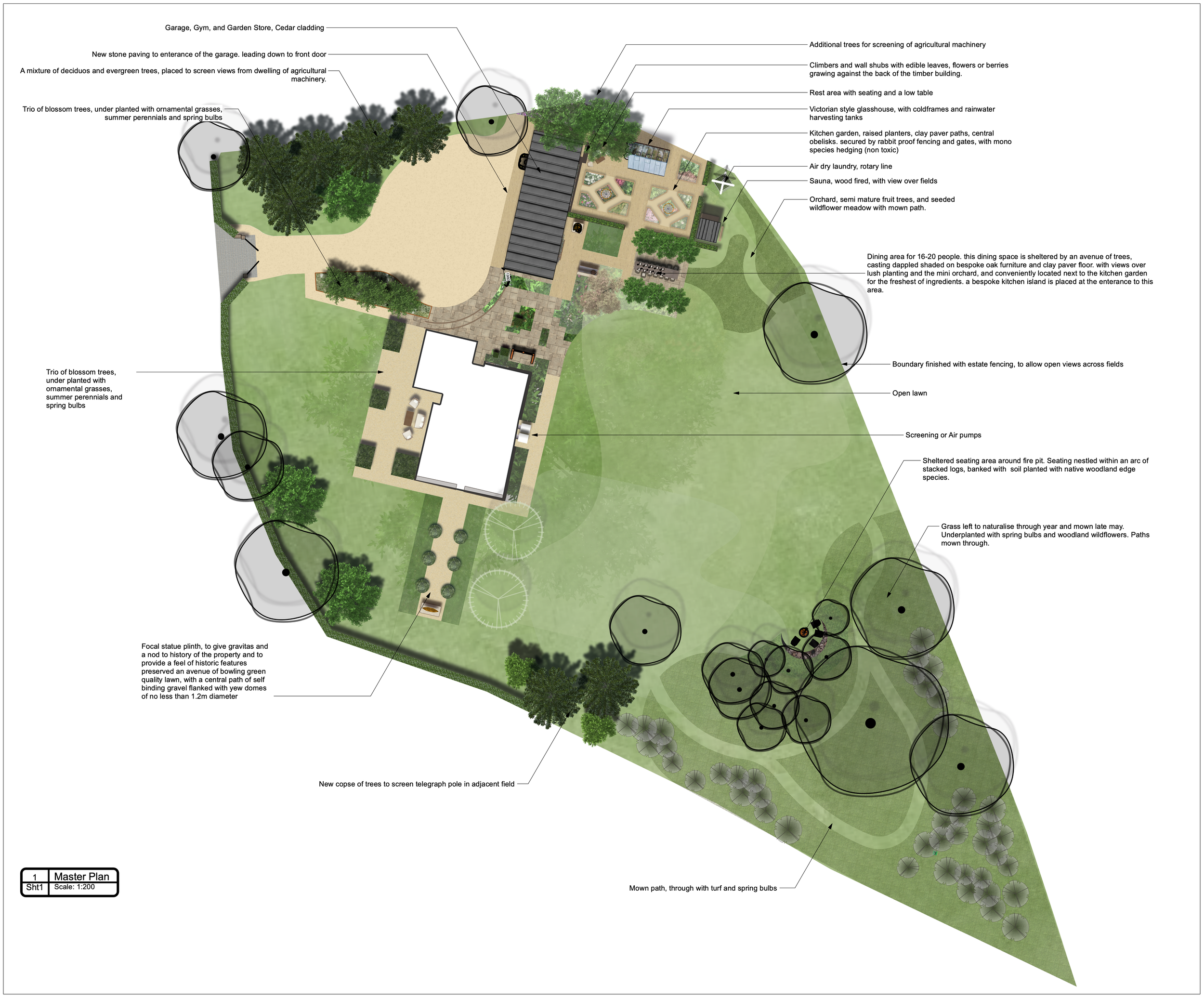
At this stage, the garden is defined in principle — how spaces connect, how movement flows, and how the design sits within the wider setting.
Design resolution
Drawings and specifications are developed to allow accurate pricing and construction.
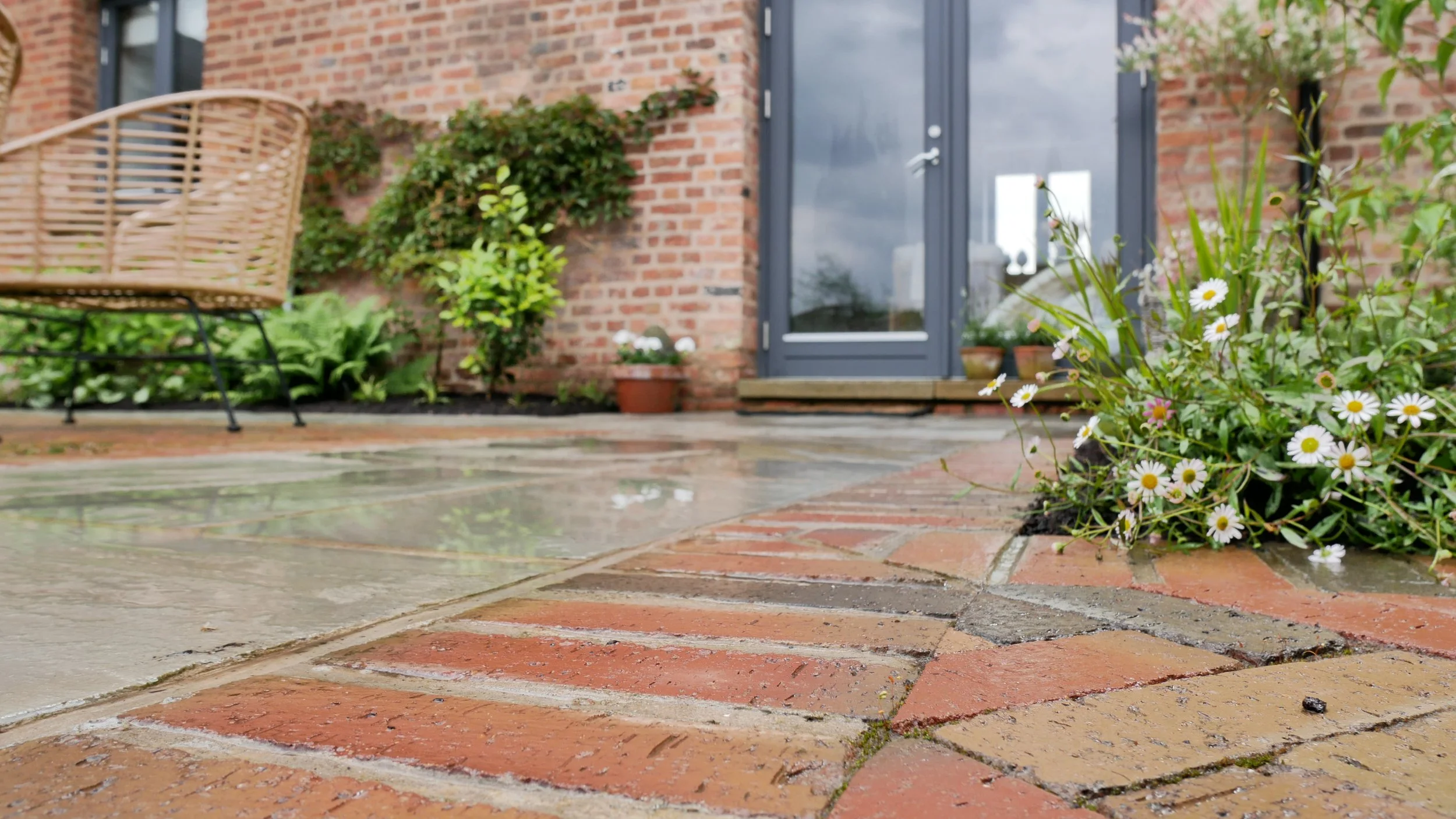
Detailed design is where the garden is fully resolved — materials are selected, levels aligned, and key junctions carefully considered so that the design can be realised with precision. This stage removes ambiguity, allowing decisions to be made in advance rather than on site, where compromises are more likely. Without this level of clarity, even strong ideas can feel disjointed; with it, the garden reads as a coherent whole, settled and complete.
Project delivery
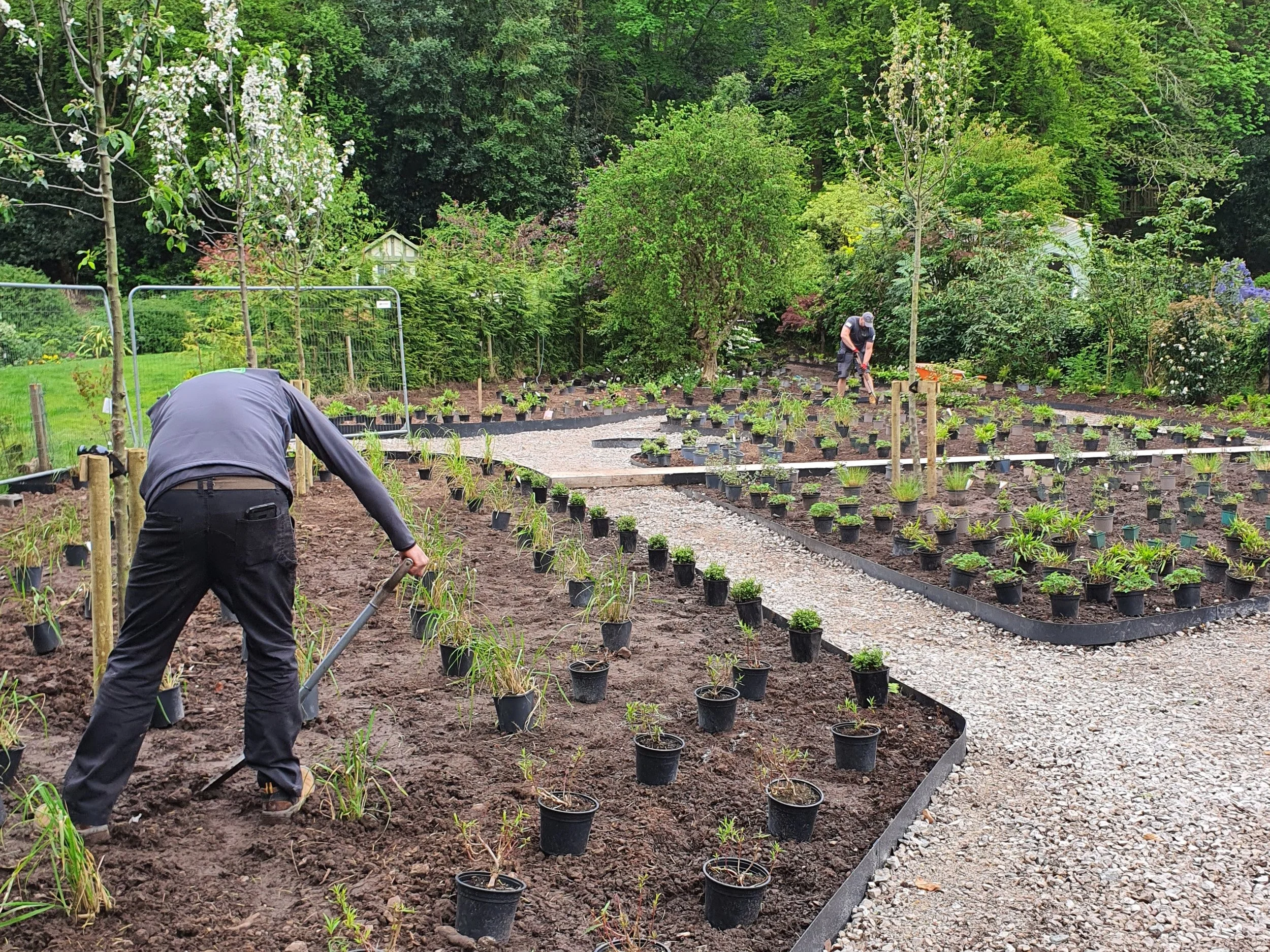
Contractors are appointed and the design is realised on site, with input as required to maintain quality.
Considerations
Time spent at the outset is invaluable. The brief often evolves as the project develops, but clarity early on allows the design to progress with greater focus and efficiency.
Detailed design is essential. Without it, even strong concepts can lose coherence during construction, resulting in a garden that feels unresolved.
Costs are managed carefully, though material fluctuations and site conditions can introduce variation. The process allows for this to be addressed in a considered way.
Good projects require time. There is typically a lead-in period before design begins, and a further period before construction can start.
Planting is dynamic. While carefully specified, some losses are expected, and gardens continue to develop beyond completion.
If you are considering a project, you can begin a conversation here.