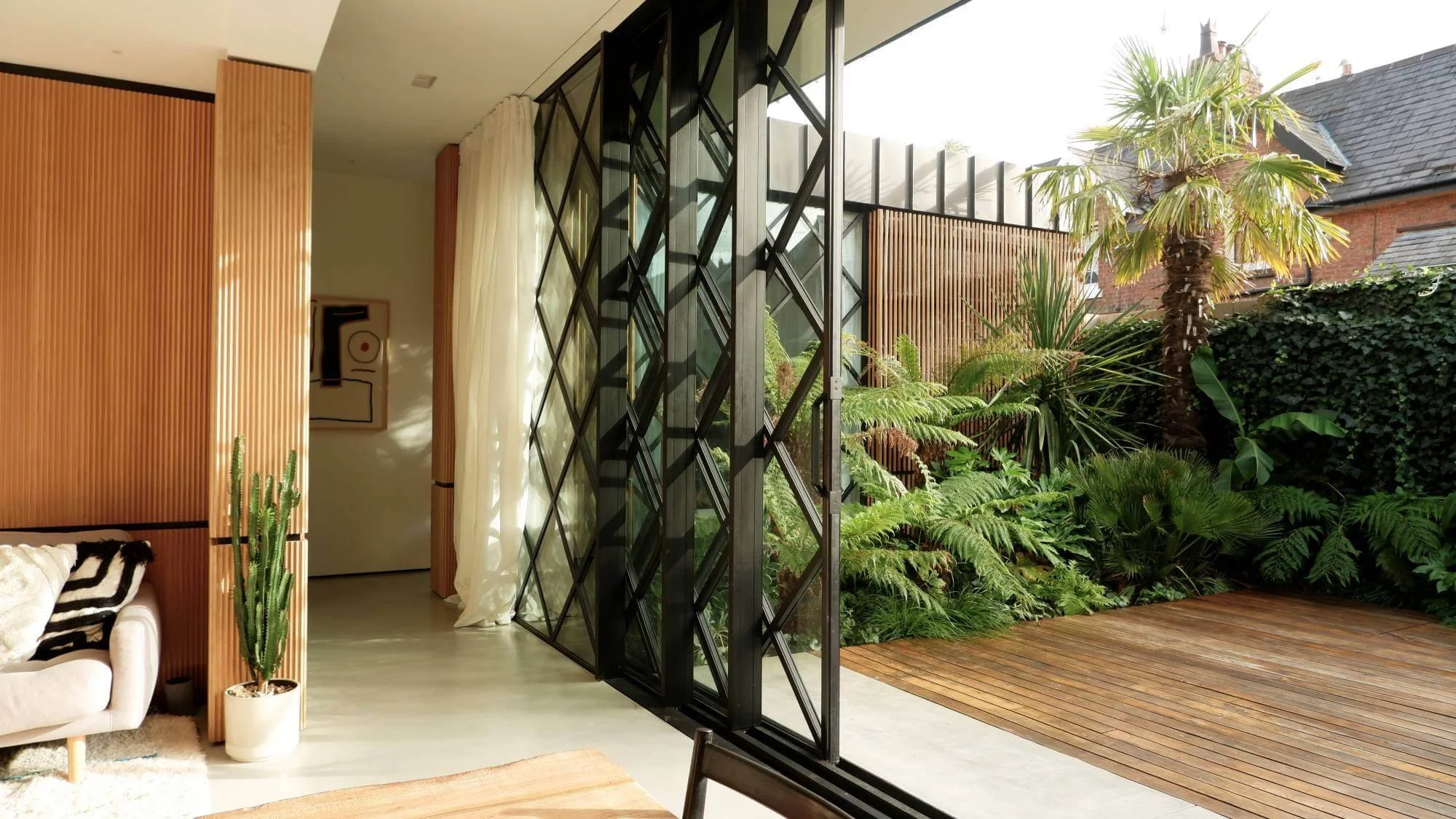
Planting Design

Design Philosophy

Architectural. Restrained. Enduring.

We favour structure over decoration.
Composition over abundance.
Planting that matures with clarity and intent.

Each scheme is developed as part of the wider architectural composition — responding to form, materiality and space. Structural planting establishes rhythm and permanence, while a controlled palette introduces subtle seasonal change without visual noise.

The result is a landscape defined by balance, precision and quiet confidence — where planting supports the architecture rather than competing with it.

Planting Design

Composed. Balanced. Evolving.

Planting is approached as an integral part of the landscape — not as decoration, but as structure, atmosphere and long-term character.

Each scheme is developed in response to architecture, soil, aspect and setting, ensuring the planting feels settled, coherent and entirely appropriate to its context.

The aim is not a brief moment of display, but continuity — gardens that mature with clarity, depth and quiet confidence.

Design Philosophy

Structure over decoration. Composition over abundance.

We favour planting that organises space, supports movement and gives the garden a legible framework through the seasons.

Structural planting establishes rhythm and permanence, while a controlled palette introduces subtle seasonal change without visual noise.

The result is a landscape where planting supports the architecture rather than competing with it.

What Planting Can Achieve

Spatial. Atmospheric. Lasting.

A successful planting scheme does more than fill borders. It can organise space, shape how a garden is experienced, provide privacy, soften hard landscaping and connect the garden to its wider setting.

Planting is also used to bring depth, atmosphere and seasonal progression — carrying the landscape from early spring through to winter structure.

Every scheme is composed to feel balanced, calm and enduring over time.

Site and Setting

Responsive. Informed. Site-Specific.

Soil conditions, aspect and exposure are considered from the outset. These practical realities inform both the planting and the wider landscape decisions.

Across Cheshire and North Wales, many gardens experience clay-based soils, wet winters, dry spells and shifting light. Planting is selected with these conditions in mind, balancing resilience with refinement.

Understanding the character of the site helps ensure the garden establishes successfully and endures well.

A Planting-Led Approach

Framework. Rhythm. Seasonal Change.

Evergreen and deciduous shrubs, clipped hedging and carefully positioned small trees form the structural backbone of the garden.

Perennials, bulbs and grasses introduce movement and progression — from early bulbs and spring freshness to autumn texture and winter presence.

Restraint and repetition are used to create cohesion, particularly where the architecture already carries presence.

Plant Sourcing and Placement

Curated. Accurate. Well Resolved.

Where required, plant material can be sourced through specialist nurseries and coordinated as part of the commission.

Support with on-site placement ensures the planting is set out accurately, with the intended balance, rhythm and spatial composition carried through into implementation.

This helps protect the design intent from drawing to establishment.

What You Receive

Clear. Detailed. Buildable.

A planting commission may include a tailored planting plan, plant schedule with quantities and pot sizes, concept notes describing the palette and seasonal intent, and soil preparation and planting establishment specifications.

Guidance can also be provided on ongoing care, helping the planting mature beautifully and ensuring the design continues to strengthen over time.

Optional involvement in sourcing and on-site layout can be included where appropriate.

Who This Suits

Design-Led. Quality-Focused. Long-Term.

Planting commissions are best suited to clients who value restraint, quality and long-term development over immediate effect.

They may be refining an established garden, commissioning a wider landscape, or working on a substantial private property where planting is expected to perform as part of a coherent architectural setting.

The strongest outcomes emerge where planting is understood as a defining element of the landscape, not an afterthought.

Planting Commissions

Composed. Supplied. Established.

Planting schemes may be commissioned independently or as part of a wider project.

If you are refining an existing garden or developing a significant property, we would be pleased to discuss a potential planting commission.

Further information can be found in our approach.

Planting commissions are undertaken on a limited basis.

Ways of Working

Integrated. Independent. Adaptable.

Planting design can be commissioned as part of a full garden design, where it is developed alongside the overall masterplan and material palette.

It can also be commissioned as a stand-alone planting plan for existing gardens where the structure is already in place but the planting requires refinement, renewal or greater coherence.

For architect-led and wider design-team projects, planting input can be provided as a specialist layer within the broader landscape scheme.

Plant Sourcing and Placement

Curated. Accurate. Well Resolved.

Where required, plant material can be sourced through specialist nurseries and coordinated as part of the commission.

Support with on-site placement ensures the planting is set out accurately, with the intended balance, rhythm and spatial composition carried through into implementation.

This helps protect the design intent from drawing to establishment.

What You Receive

Clear. Detailed. Buildable.

A planting commission may include a tailored planting plan, plant schedule with quantities and pot sizes, concept notes describing the palette and seasonal intent, and soil preparation and planting establishment specifications.

Guidance can also be provided on ongoing care, helping the planting mature beautifully and ensuring the design continues to strengthen over time.

Optional involvement in sourcing and on-site layout can be included where appropriate.

Who This Suits

Design-Led. Quality-Focused. Long-Term.

Planting commissions are best suited to clients who value restraint, quality and long-term development over immediate effect.

They may be refining an established garden, commissioning a wider landscape, or working on a substantial private property where planting is expected to perform as part of a coherent architectural setting.

The strongest outcomes emerge where planting is understood as a defining element of the landscape, not an afterthought.

Planting Commissions

Composed. Supplied. Established.

Planting schemes may be commissioned independently or as part of a wider project.

If you are refining an existing garden or developing a significant property, we would be pleased to discuss a potential planting commission.

Further information can be found in our approach.

Planting commissions are undertaken on a limited basis.

Planting Commissions

Composed. Supplied. Established.

Planting schemes can be commissioned as part of a wider project, or as a focused intervention within an existing landscape.

Each scheme is carefully developed and implemented, with plant material sourced through specialist nurseries and grown for quality, structure and longevity.

The emphasis is on composition, performance and long-term establishment — ensuring the planting settles with clarity and intent.

For further information, see our approach.

Planting commissions are undertaken on a limited basis.

Plant material is sourced and supplied as part of the commission, ensuring consistency, quality and alignment with the design intent.

We also work with clients and design teams to refine and rework existing planting schemes.