ROLE OF THE MASTERPLAN
A garden rarely reveals itself all at once.
It begins as a set of relationships — between house and land, enclosure and openness, movement and pause. The masterplan is the stage at which these relationships become legible.
Not fixed. But clear.
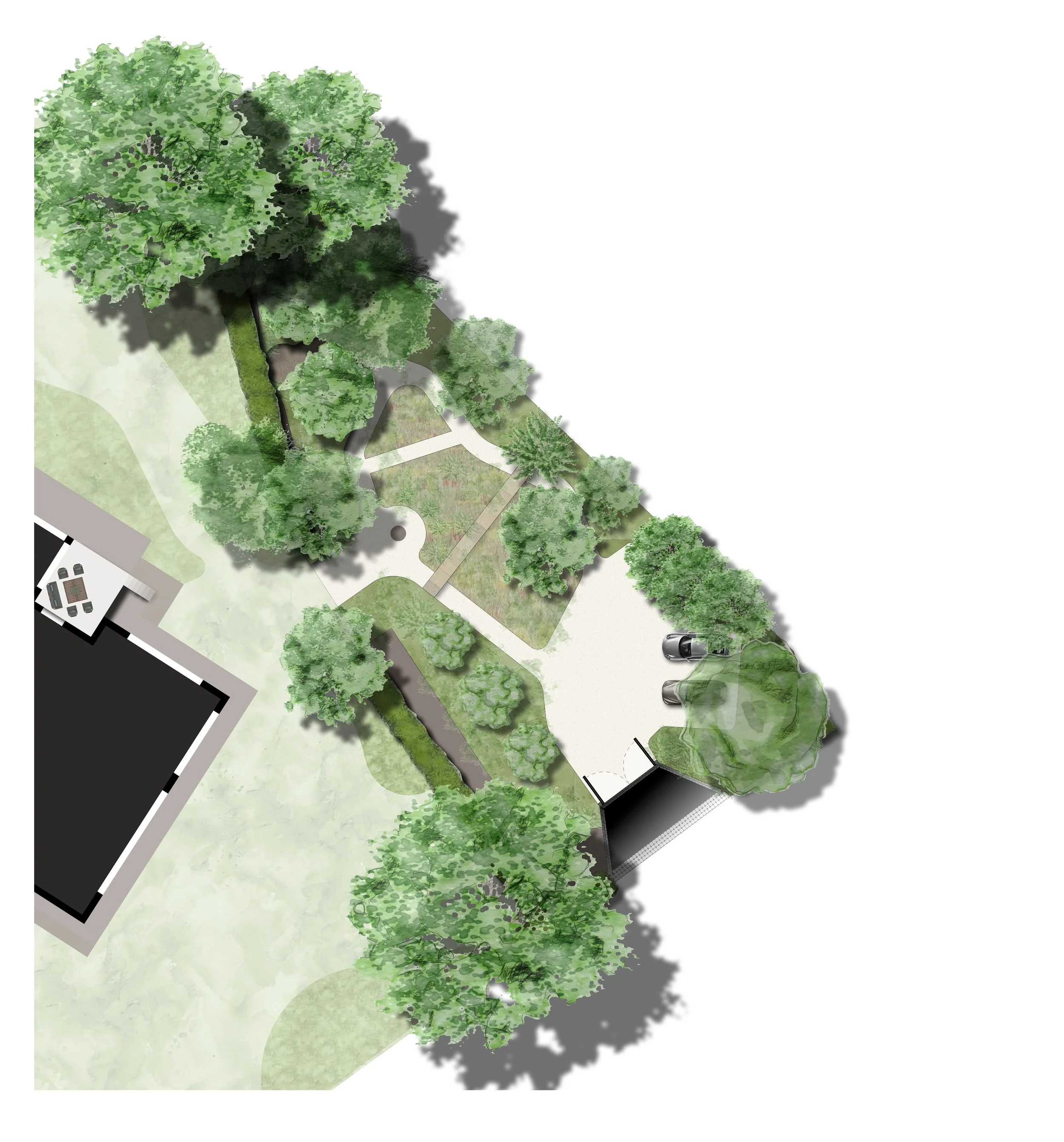
The masterplan is often misunderstood as a finished design. In reality, it is something more fundamental — the underlying structure upon which everything else depends.
At this stage, the garden is resolved in principle:
how spaces connect and unfold
where thresholds sit between inside and out
how levels are negotiated
how the garden is experienced over time
It is here that the garden begins to feel inevitable — as though it could not be arranged in any other way.
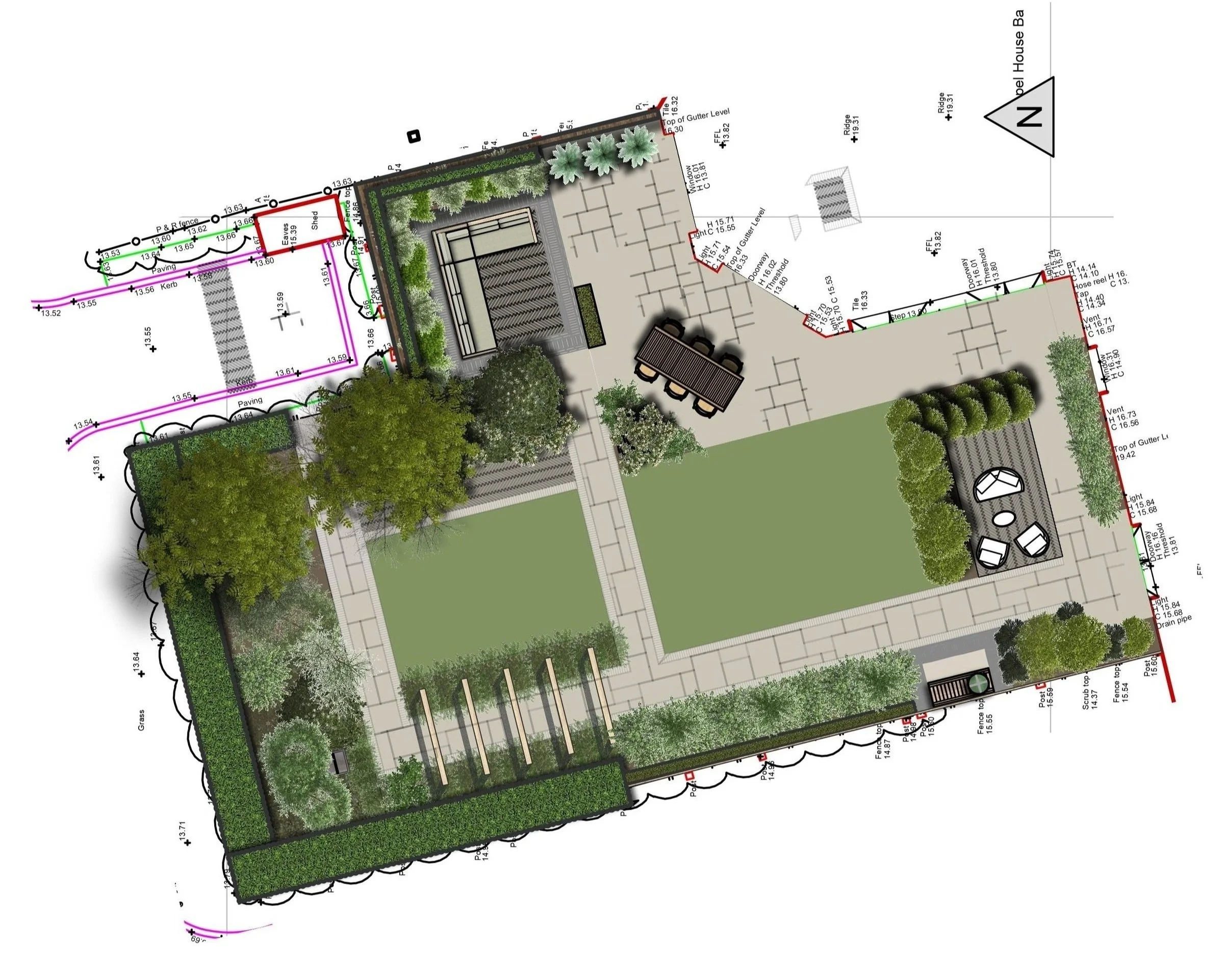
What the masterplan does not do is define every detail.
Materials are not yet fully specified. Construction drawings are not yet resolved. Planting, while considered, is not finalised in its entirety.

And this is intentional.
Because clarity of structure must come before refinement of detail.
For many clients, this can feel like a natural point to move forward to construction. The layout is clear, the arrangement feels convincing, and the garden can be imagined.
But it is the stages that follow — the careful development of levels, junctions, materials and planting — that determine whether the finished garden holds together with quiet coherence, or begins to fragment under scrutiny.
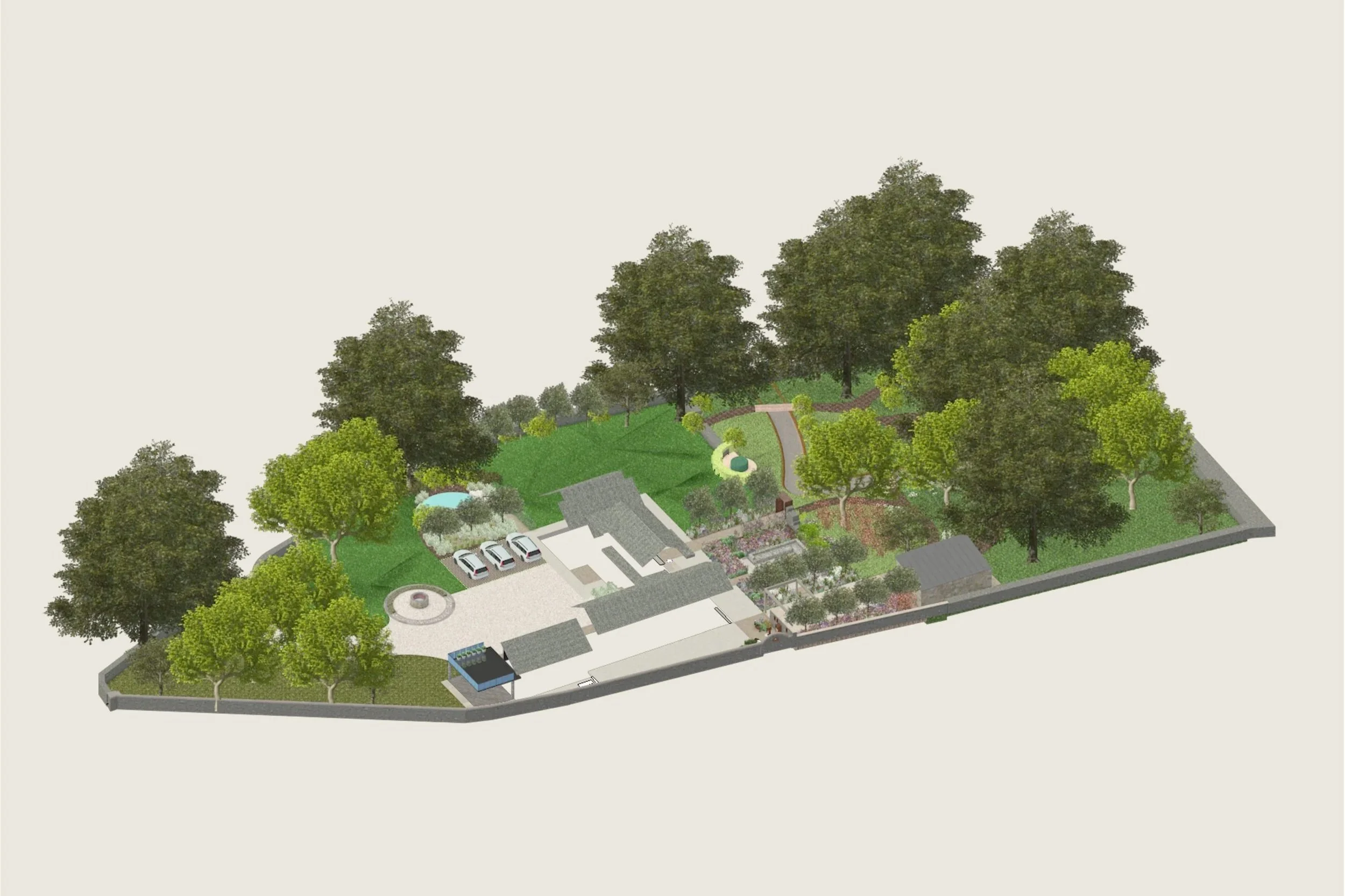
A well-considered masterplan provides direction.
It establishes the logic of the garden, allowing every subsequent decision to be made with confidence and consistency. It protects the integrity of the design as it moves from drawing into built form.
Without it, decisions are made in isolation.
With it, the garden becomes a composition.
In this way, the masterplan is not an end point, but a beginning — the moment at which the design becomes clear enough to be trusted, and open enough to be refined.
If you are considering a garden where design is integral to the outcome, we welcome an initial conversation.
