Project
Home Lodge, Nannerch.
Private client · Rural garden design · Driveway and parking resolution · Outdoor living spaces
Developed for a stone lodge in rural North Wales, the garden was shaped around privacy, movement and the character of the setting — creating a more comfortable relationship between house, approach, stream and open garden.

Design
Set within a small rural hamlet in North Wales, the property had a strong sense of place, with local stone, Welsh slate and an open relationship to the surrounding landscape.
The garden already held character, mature planting and a sense of openness, but the arrival sequence, driveway and main outdoor spaces needed clearer definition. The existing access divided the plot visually, while the garden felt exposed from the lane and insufficiently resolved around the house.
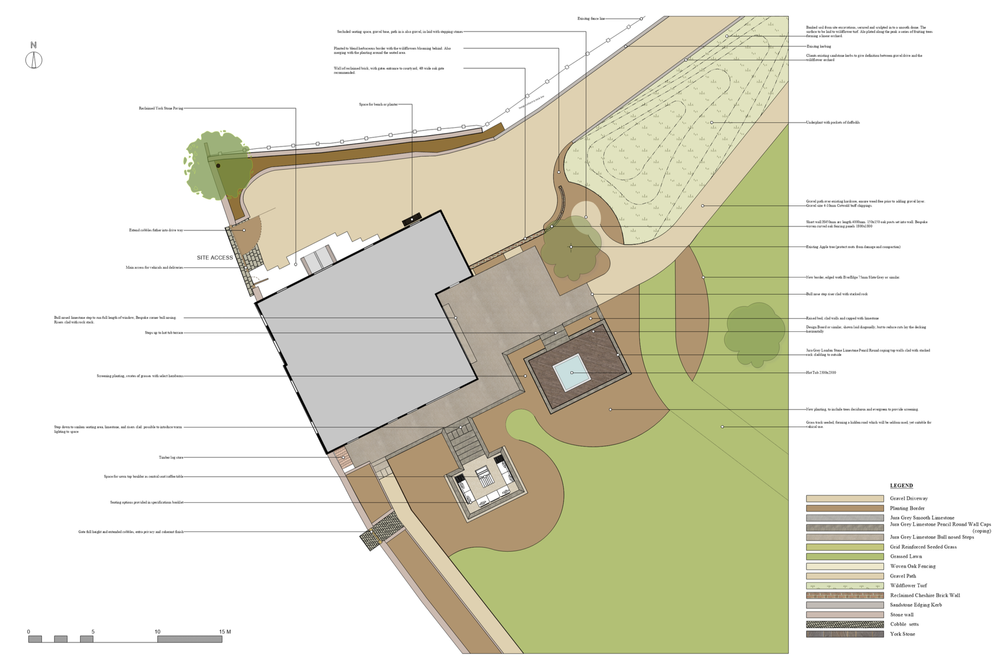
The design reorganised the garden through a series of connected spaces: a more discreet parking area close to the house, a larger dining terrace, an intimate bistro space by the apple tree, and softer planted transitions between driveway, lawn and stream.
Rather than imposing a formal layout, the scheme used informal curves, gentle level changes and grounded materials to sit comfortably with the lodge and its rural setting.
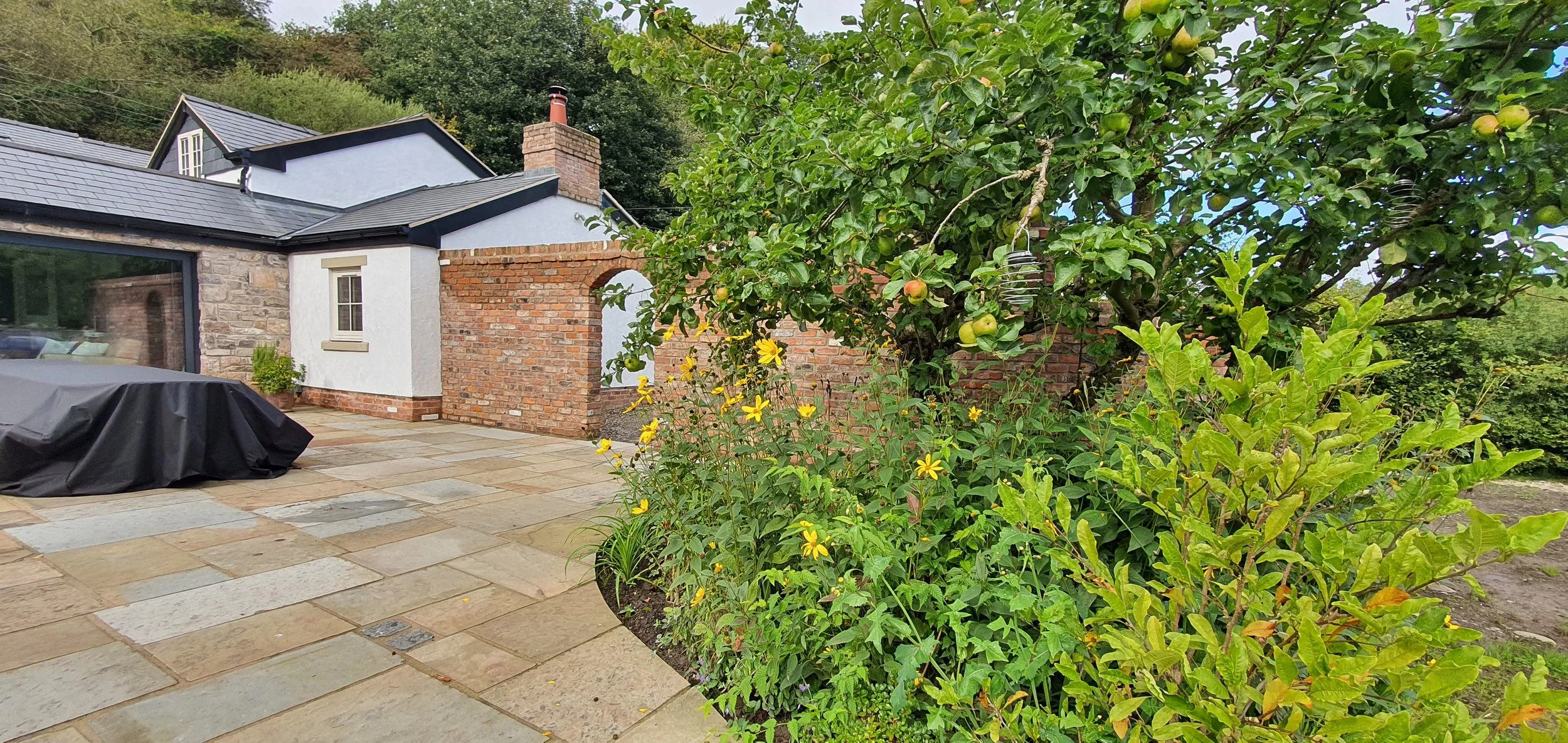
York stone, reclaimed Victorian brick, natural aggregate gravel and existing on-site materials were brought together to create a hard landscape palette that felt honest, practical and appropriate to the building.
Planting was used to bring privacy, softness and seasonal depth, with fruit trees, wildflower underplanting, herbaceous borders, lavender near seating areas and screening around the parking spaces.

Outcome
A rural garden shaped around privacy, movement and place.
The completed design gives the lodge a more settled garden framework, resolving the practical requirements of access, parking and outdoor living while preserving the openness and rural character of the site.
The garden now reads as a more coherent sequence — arrival, parking, seating, planting and stream edge working together rather than competing for attention.
The result is a North Wales garden that feels grounded in its setting: practical, informal and quietly connected to the house, materials and surrounding landscape.
Enquire
Considering a project in North Wales?
If you are renovating, extending or rethinking your landscape in North Wales, we would be pleased to hear more about the property and the way you would like the garden to feel and function.